Alloy Theory Laboratory

Research

We combine computational, data-driven, and experimental approaches to understand how chemistry, disorder, defects, vibrations, and processing control materials performance in nuclear, high-temperature, and other extreme environments.

Current directions

Questions we are pursuing

Our work moves between atomic-scale mechanisms, predictive computation, and experimental validation.

Phase competition, chemical order, and alloy design

We investigate how electronic structure, local bonding, lattice distortions, and vibrational entropy influence phase stability and chemical ordering in compositionally complex alloys. High-throughput calculations and machine learning are used to identify physically meaningful trends and candidate compositions.
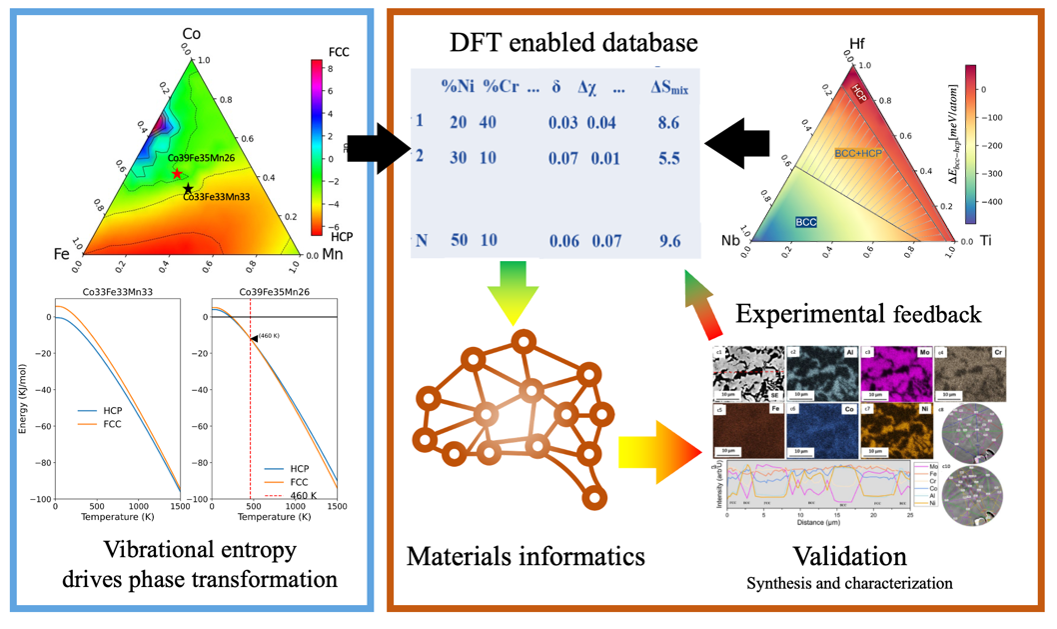
High-entropy alloysShort-range orderPhase stabilityMachine learning
DFT energetics and machine-learning workflow for alloy design

Phonon engineering and thermal transport

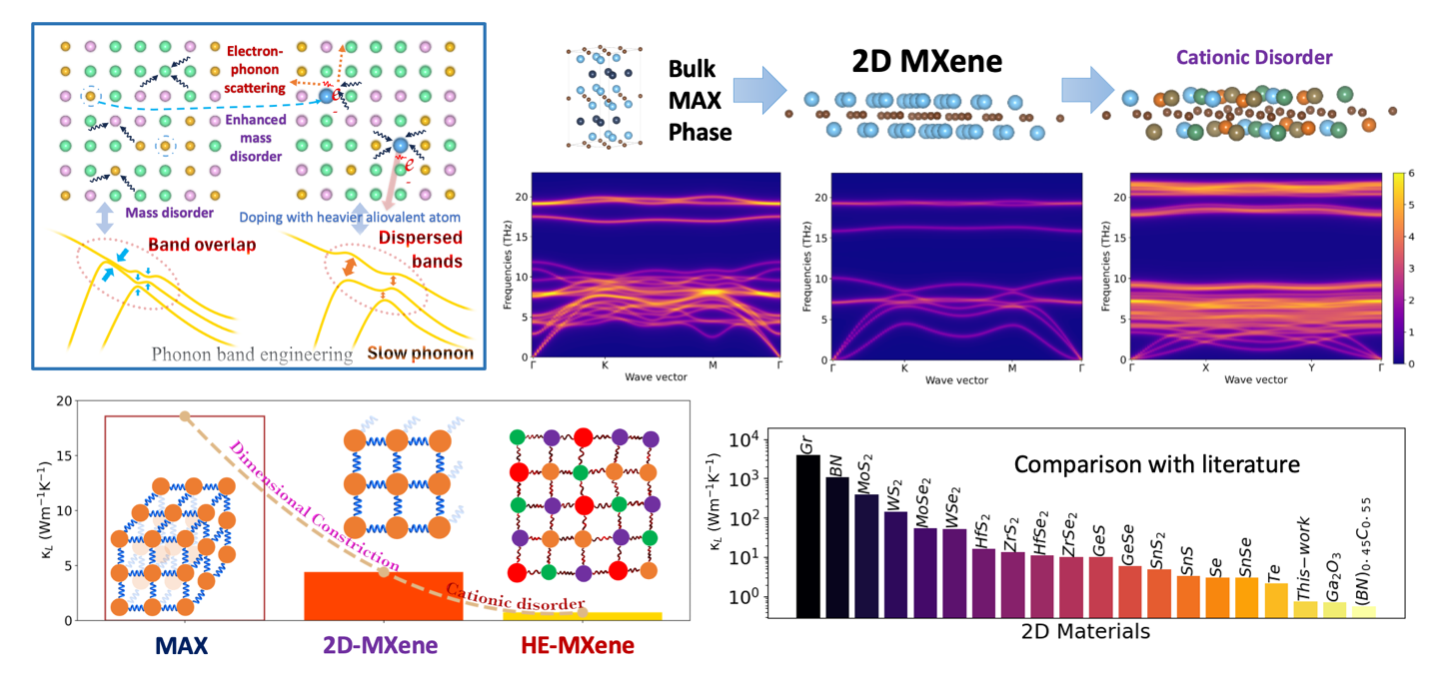
We study how chemistry, dimensionality, structural complexity, and disorder reshape lattice vibrations and thermal transport. Systems of interest include refractory compounds, MAX phases, MXenes, oxides, and compositionally complex materials for thermal management.

Lattice dynamicsThermal conductivityAnharmonicityPhonon scattering
Crystal structures, phonon dispersions, and thermal conductivity comparisons

Radiation-tolerant crystalline and amorphous materials

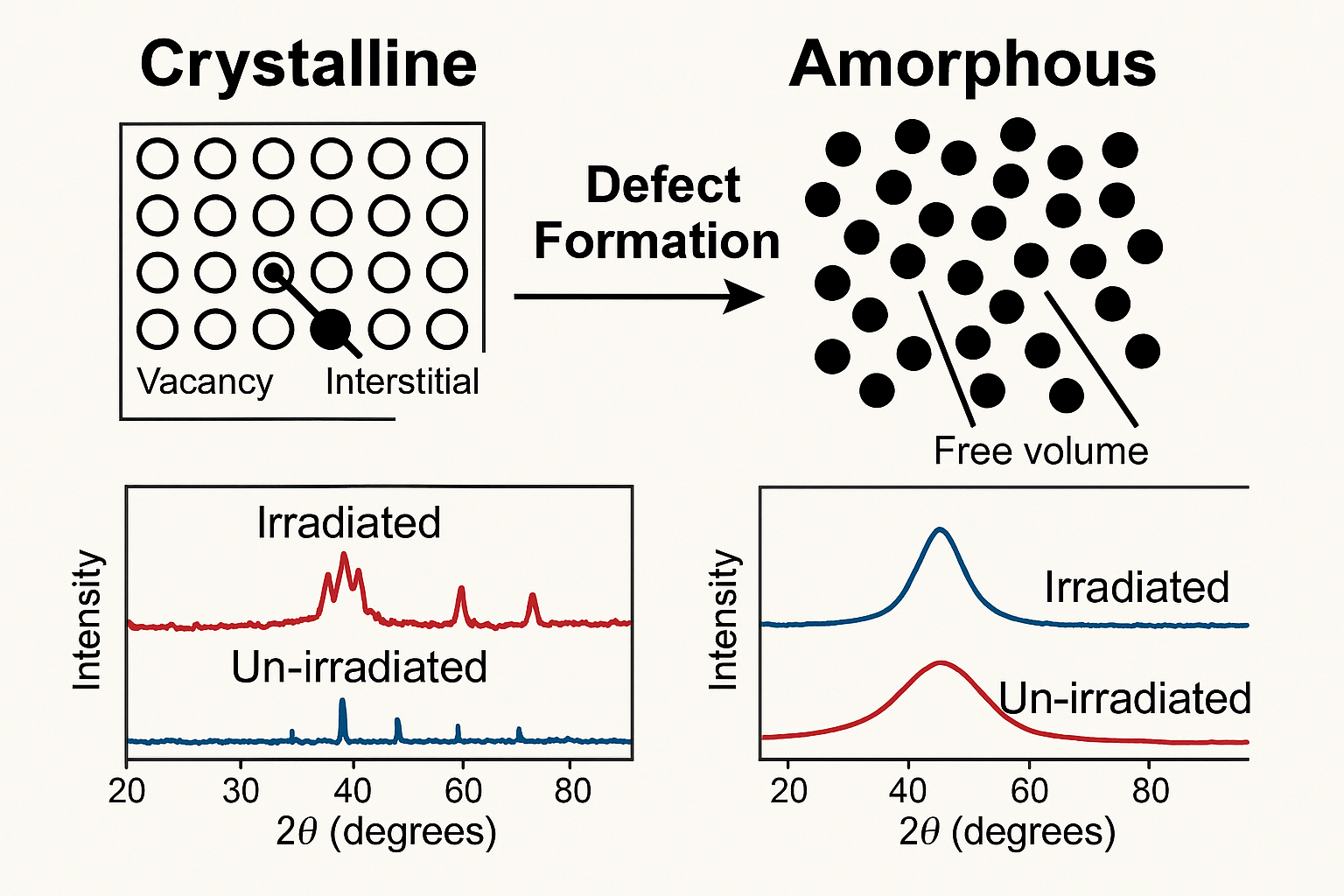
We compare how crystalline and disordered structures accommodate energetic disturbances, defects, and compositional complexity. The goal is to establish structure–response relationships that can guide the design of radiation-tolerant materials for nuclear applications.

Radiation responseAmorphous materialsDefectsNuclear materials
Computational and experimental comparison of crystalline and amorphous radiation response

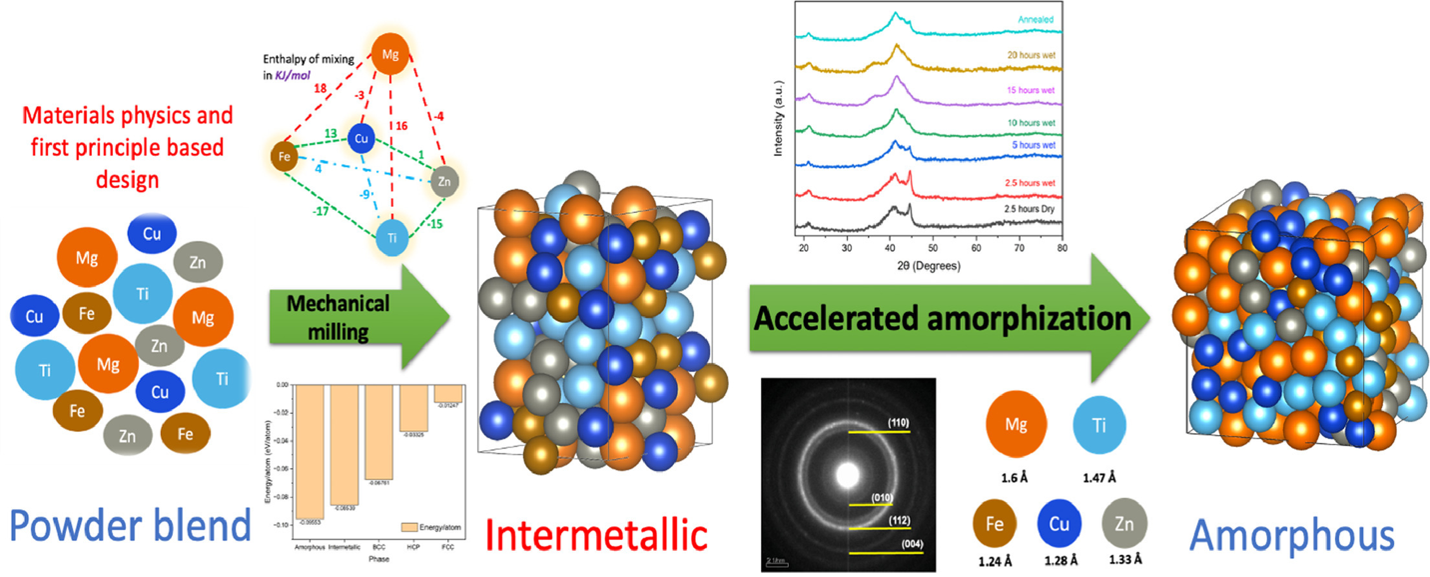
Nonequilibrium synthesis and amorphous alloy powders

Mechanical alloying and related nonequilibrium processing routes enable rapid exploration of multicomponent powders, metastable phases, and amorphous structures. Computation is used to interpret structural evolution and guide composition selection.

Mechanical alloyingAmorphizationPowder processingMetastability
Amorphization process and powder microstructure

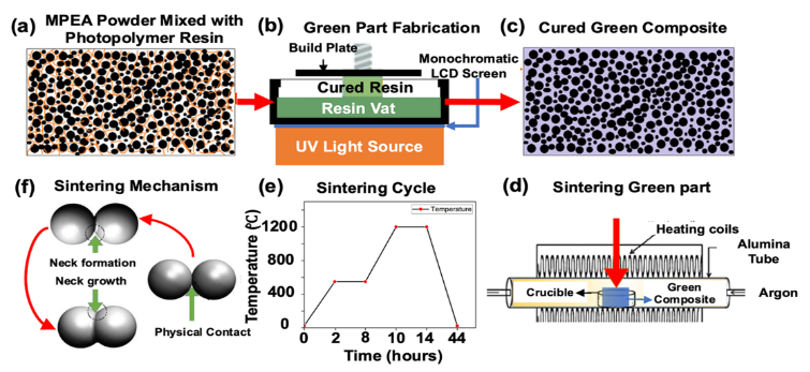
Processing–structure–property relationships

We connect computational materials design with experimental processing, including alloy synthesis, thermal treatment, additive manufacturing concepts, oxidation testing, and mechanical characterization.

Alloy synthesisAdditive manufacturingOxidationMechanical behavior
Schematic of a materials processing and additive manufacturing route

Research capabilities & infrastructure

Integrated computation, synthesis, and characterization

Available

High-Performance Computing

UW Advanced Research Computing, large-scale national allocations, and automated high-throughput workflows.

Developing facility

Controlled-Atmosphere Glovebox

Inert-atmosphere handling and integrated workflows for reactive alloy processing.

Developing facility

Arc Melter

Button-alloy synthesis under controlled atmosphere for rapid composition screening.

Developing facility

SPEX Shaker Mill

Mechanical alloying and nonequilibrium powder processing for multicomponent and amorphous alloys.

Developing facility

High-Temperature Furnace

Controlled thermal treatments and oxidation studies for alloy stability and environmental response.

Developing facility

Ultra-Microhardness Testing

Load–displacement measurements, hardness mapping, and small-scale mechanical characterization.

Collaborations

Connecting computation with experimental insight

The group works with researchers across universities and national laboratories. New collaborations with academic, national-laboratory, and industry partners working on extreme-environment materials are welcome.

Lab life & highlights

A growing record of the group

Campus, research, and facility images will gradually be replaced by photographs of the laboratory and team as the group grows.