Materials science across scales

Prince Sharma

Assistant Professor · University of Wyoming

Designing alloys and disordered materials for nuclear, high-temperature, and extreme environments through first-principles calculations, atomistic simulations, machine learning, and experiments.

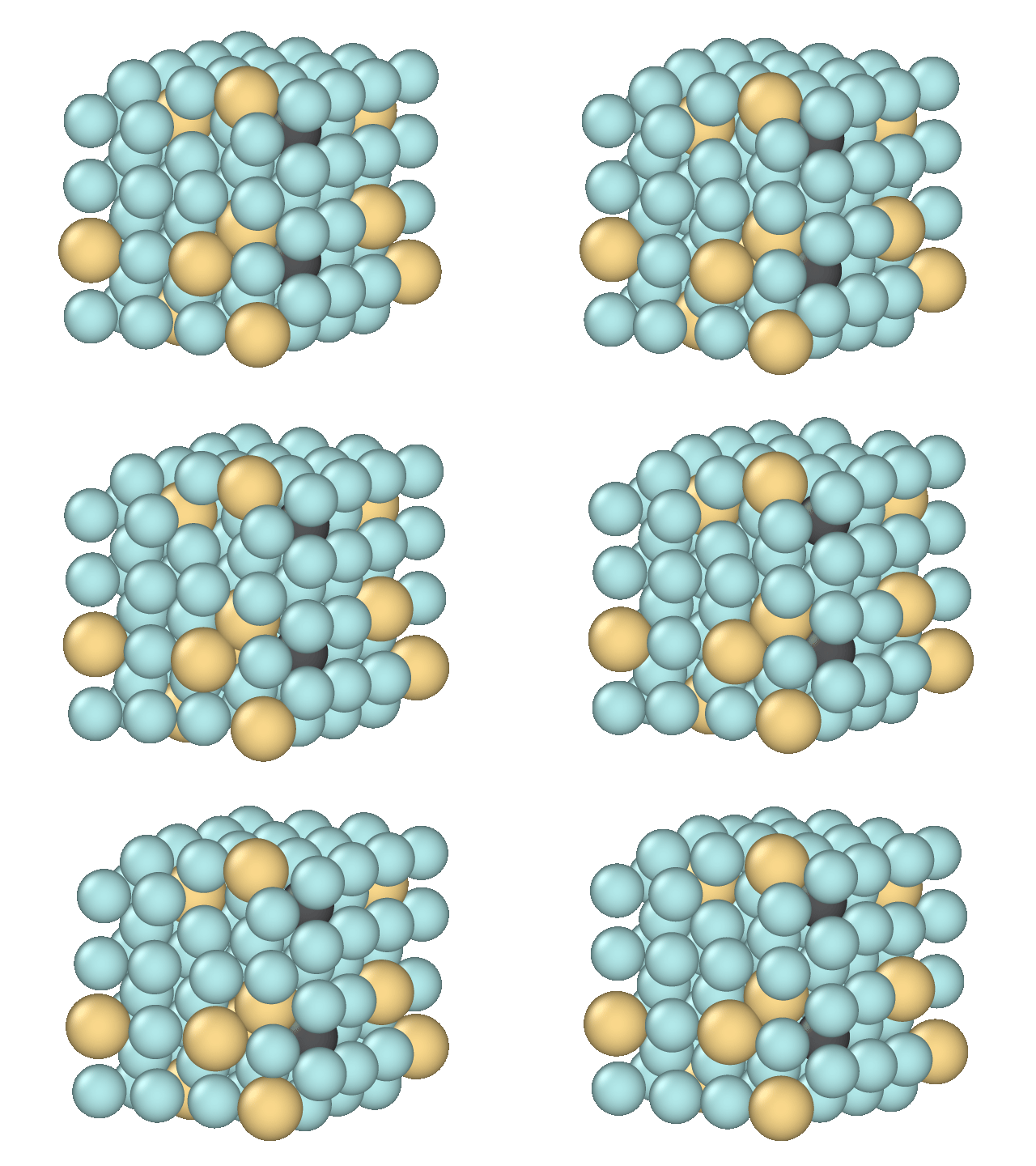
Animated atomistic structure of a multicomponent alloy
Dr. Prince Sharma

About me

Connecting atomic-scale physics with materials performance

I am an Assistant Professor in the Department of Mechanical Engineering and the School of Energy Resources at the University of Wyoming. My research integrates computational, data-driven, and experimental methods to understand and design materials for nuclear, energy, aerospace, and extreme environments.

My work spans chemical disorder, phase stability, refractory and high-entropy materials, lattice dynamics, thermal transport, mechanical behavior, oxidation resistance, and radiation tolerance. I enjoy developing computational methods, synthesizing alloys, and working with interdisciplinary teams to connect theory with measurable materials behavior.

Teaching and mentoring are central to my work. I aim to help students become independent researchers who can question assumptions, build useful models, and test ideas rigorously.

DFT Molecular Dynamics Machine Learning Lattice Dynamics Alloy Synthesis
What is life, but elements in graceful array? What is death, but that order drifting away?
English translation of lines by Chakbast Braj Narayan

Academic background

Education

Ph.D.

Mechanical Engineering and Mechanics

Lehigh University · Bethlehem, Pennsylvania

Dissertation: Additives in Solid-Solutions: Understanding Structural Properties of Alloys From Electron & Phonon Dynamics
Advisor: Prof. Ganesh Balasubramanian

M.Tech.

Materials Science

Indian Institute of Technology Hyderabad · India

B.E.

Mechanical Engineering

SGSITS · Indore, India

Research at a glance

Research areas

Four connected questions link atomic-scale mechanisms to materials that must perform under demanding conditions.

01

Extreme-Environment Materials

Refractory alloys, oxidation-resistant materials, radiation-tolerant systems, and structural materials for nuclear and high-temperature service.

02

Chemical Disorder & Phase Stability

High-entropy materials, short-range order, amorphization, competing crystal structures, and entropy-mediated phase selection.

03

Phonons & Thermal Transport

Lattice dynamics, vibrational entropy, phonon scattering, thermal conductivity, and composition–transport relationships.

04

Data-Driven Materials Discovery

High-throughput computation, interpretable machine learning, interatomic potentials, and integrated computational–experimental workflows.

Research group

Alloy Theory Laboratory

Based at the University of Wyoming, the laboratory studies how chemistry, disorder, defects, vibrations, and processing govern materials performance. We connect alloy theory with data science, synthesis, and characterization.

Current interests

  • Alloy design for nuclear and high-temperature environments
  • Chemical disorder and short-range order
  • Phonon transport and lattice dynamics
  • Computational–experimental materials discovery

Selected work

Recent research and open resources

Graphical abstract from lattice-dynamics research

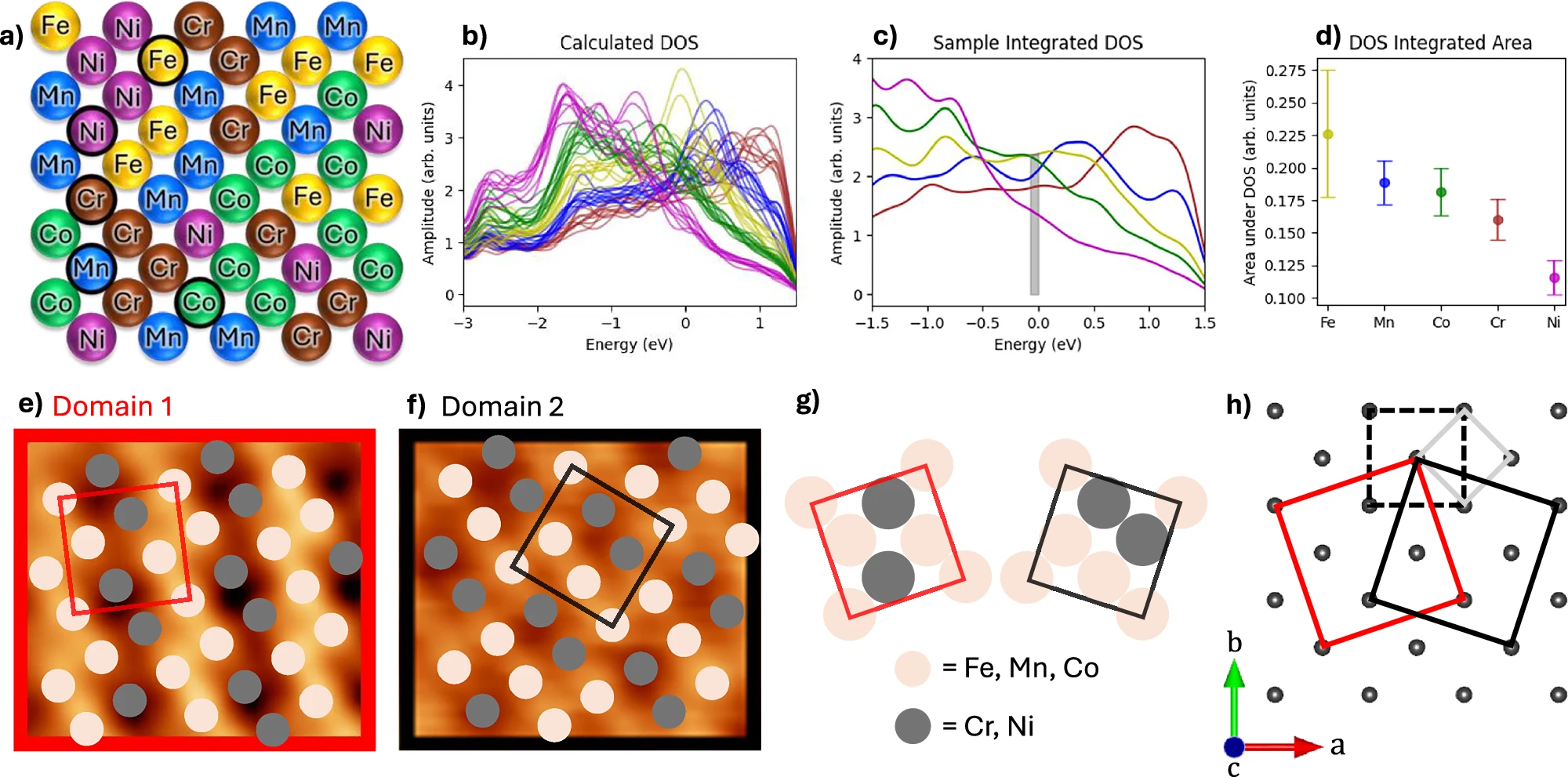
Surface local chemical order

Collabrative work lead by Dr. Kim and Prof. TeYu Chien. Direct observation and atomistic interpretation of local chemical ordering in high-entropy alloy.

Read in Nature Communications
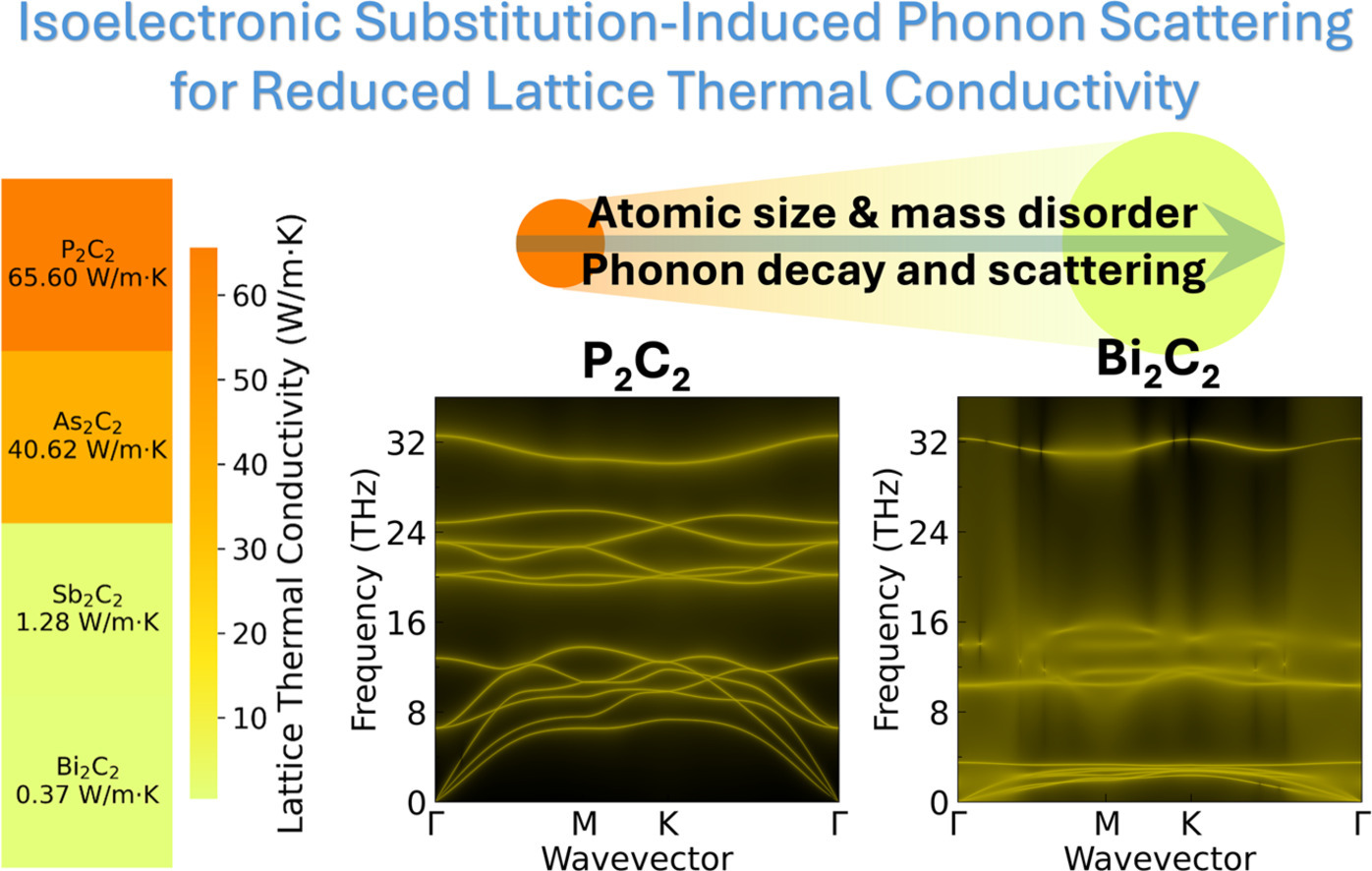
Phonon dispersion and thermal transport visualization

Phonon engineering

Understanding how mass, bonding, structure, and disorder reshape vibrational dynamics and thermal transport.

View related publications
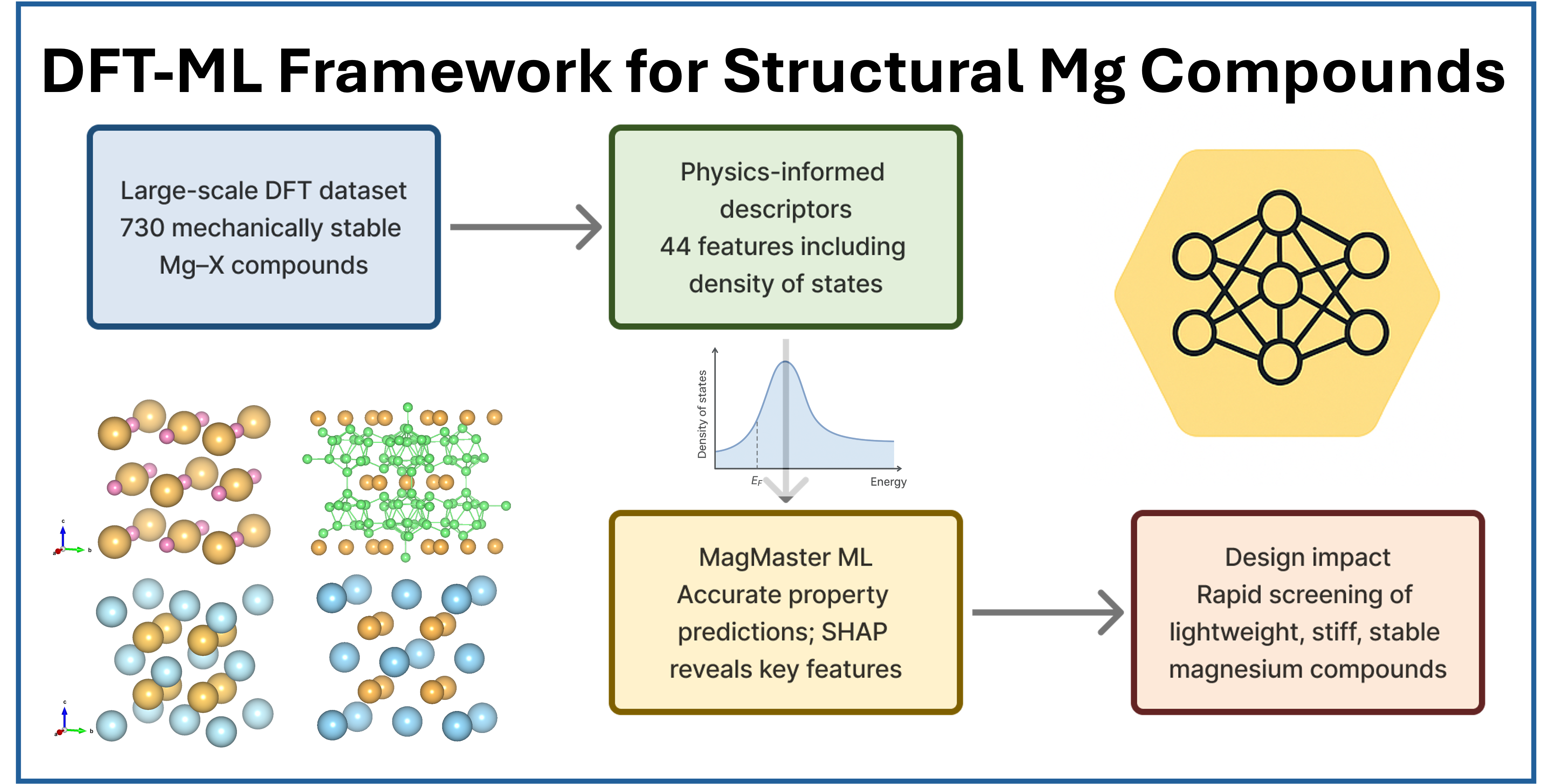
High-throughput computation and machine-learning workflow

MagMaster open dataset

An interactive dataset connecting high-throughput DFT calculations and machine learning for binary magnesium compounds.

Explore MagMaster

Professional journey

University of Wyoming

Assistant Professor, Mechanical Engineering and School of Energy Resources
2026–present

Johns Hopkins University

Postdoctoral Fellow, Hopkins Extreme Materials Institute
2024–2026

Ames National Laboratory

Visiting Scientist, Materials Sciences and Engineering
2023–2024

NASA Ames Research Center

Materials Scientist/Engineer, Thermal Protection Materials Branch
2022